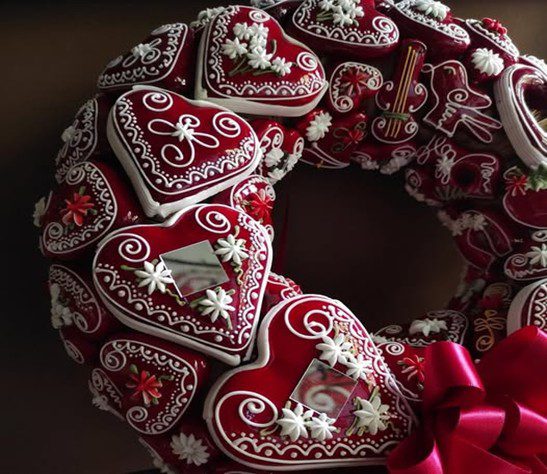
As you stroll through Zagreb’s streets, markets, and small souvenir shops, one symbol appears again and again: the bright red licitar heart. Cheerful, richly decorated, and instantly recognisable, licitars are far more than pretty souvenirs — they are edible pieces of history, tradition, and storytelling.
The artisans behind these beautiful creations are known as „medičari and voskari“
Colorfully decorated honey cakes like licitars can be found throughout Central Europe and even beyond. In Austria and Germany, they are known as Lebkuchen or Lebzelter — words that also reveal the origin of the Croatian term licitar.
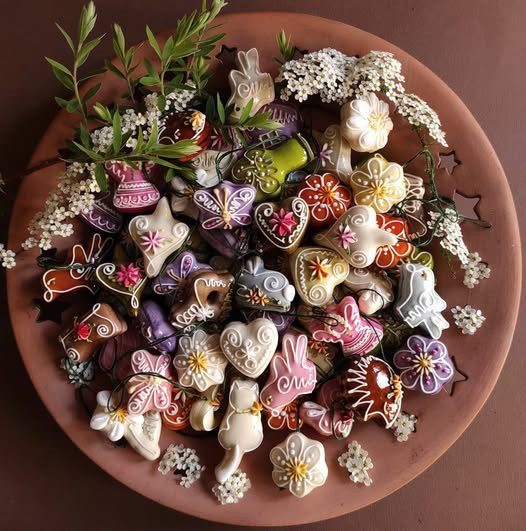
While they all share the same roots, licitars from northwest Croatia gradually developed their own unique identity. Over time, local craftsmen introduced a vivid red glaze, delicate white icing, floral motifs, and characteristic decorations that made them instantly stand out.
Although made from honey dough, licitar hearts were never meant to be eaten straight away. Traditionally, they were created as symbols — gifts for special occasions such as weddings, fairs, religious celebrations, and holidays. Because of their striking appearance and deep cultural meaning, licitar hearts slowly grew beyond their regional origins, becoming a symbol not only of northwest Croatia, but eventually of Zagreb and the entire country.The artisans behind these beautiful creations are known as „medičari and voskari“ traditional craftsmen whose skills were passed down through generations. Medičari specialised in making honey-based sweets like licitars, while voskari worked with wax, creating candles and decorative items often sold at fairs and religious festivals. Together, they shaped a craft that blended everyday life, celebration, and symbolism, turning simple materials like honey and sugar into objects filled with meaning.
Behind their charming look lies a particularly romantic old legend.
In the past, licitar hearts played a role in courtship. A young man would gift a licitar heart to the girl he admired. Often, a small mirror was placed in the centre of the heart. When the girl looked into it, she would see her own reflection — and, symbolically, the young man offering his heart to her.
If the girl liked the boy, she would keep the licitar heart, proudly displaying it or saving it as a keepsake. If she didn’t… legend says she would simply eat it.
Today, licitar hearts are cherished mainly as decorative souvenirs rather than love tests, but their message remains unchanged. They represent affection, craftsmanship, and a slower time when emotions were expressed through simple, handmade gestures.
And perhaps that is why licitars still feel so perfectly at home in Zagreb — a city where traditions live quietly alongside everyday life, where stories are shared over coffee, and where even a small red heart can carry centuries of meaning.
Photos by Courtesy of Blažeković family (via Facebook page: Blažeković licitari).